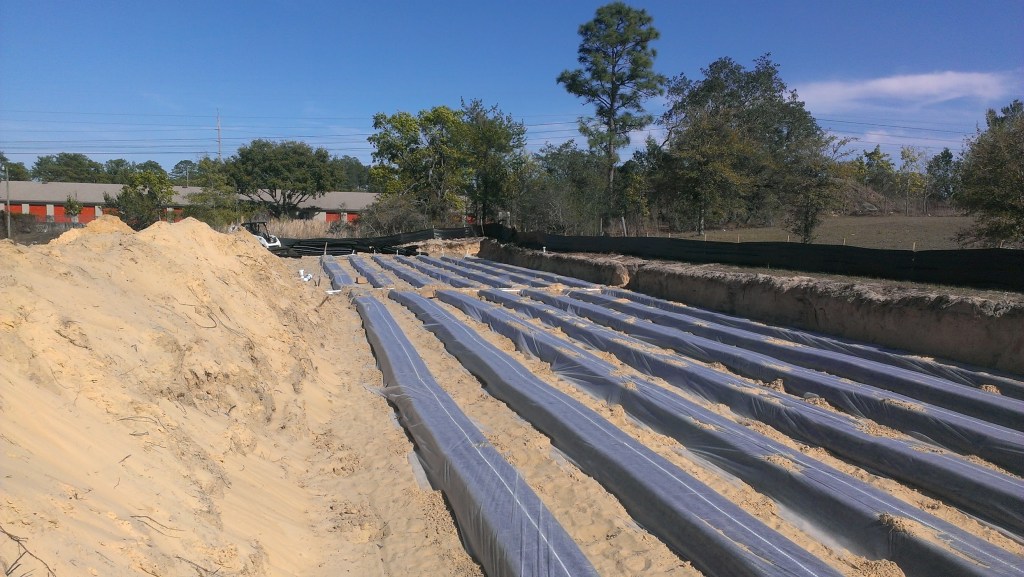
Traditional Drain field utilizing more land.
The footprint of a drain field in traditional septic systems tends to be on the larger side due to the requirement of sufficient space for the dispersal of treated wastewater into the soil. However, with drip irrigation septic systems, the footprint of the drain field can be significantly reduced through several key mechanisms:
Efficient Water Distribution: Drip irrigation systems are designed to precisely deliver treated wastewater in small, controlled amounts. Unlike conventional systems that disperse water across a broad area, drip systems use a network of small emitters or tubing to target specific areas, allowing for a more concentrated and efficient distribution of water.
Optimized Soil Absorption: Engineers analyze the soil’s characteristics, including permeability and absorption rates, to determine the optimal locations and spacing for the drip emitters. This analysis helps ensure that the wastewater is effectively absorbed by the soil without excessive runoff or pooling, allowing for a more compact drain field design.
Enhanced Treatment Efficiency: Drip irrigation systems often include additional treatment stages before the wastewater reaches the drip tubing. These stages involve filtration, disinfection, or aerobic processes that further purify the water, allowing for a reduction in the required area for dispersal as the treated water is of higher quality and can be applied in smaller quantities.
Flexible Design Options: The flexibility of drip systems allows engineers to design layouts that suit specific landscapes and environmental conditions. By strategically placing the emitters and adjusting their flow rates, engineers can maximize the utilization of available space, reducing the overall footprint required for the drain field.
Adaptation to Varied Terrains: Drip systems can be adapted to various terrains, including sloped or irregular landscapes, by utilizing different designs or adjusting the system’s pressure and flow rates. This adaptability enables more efficient use of available land without compromising the system’s performance.
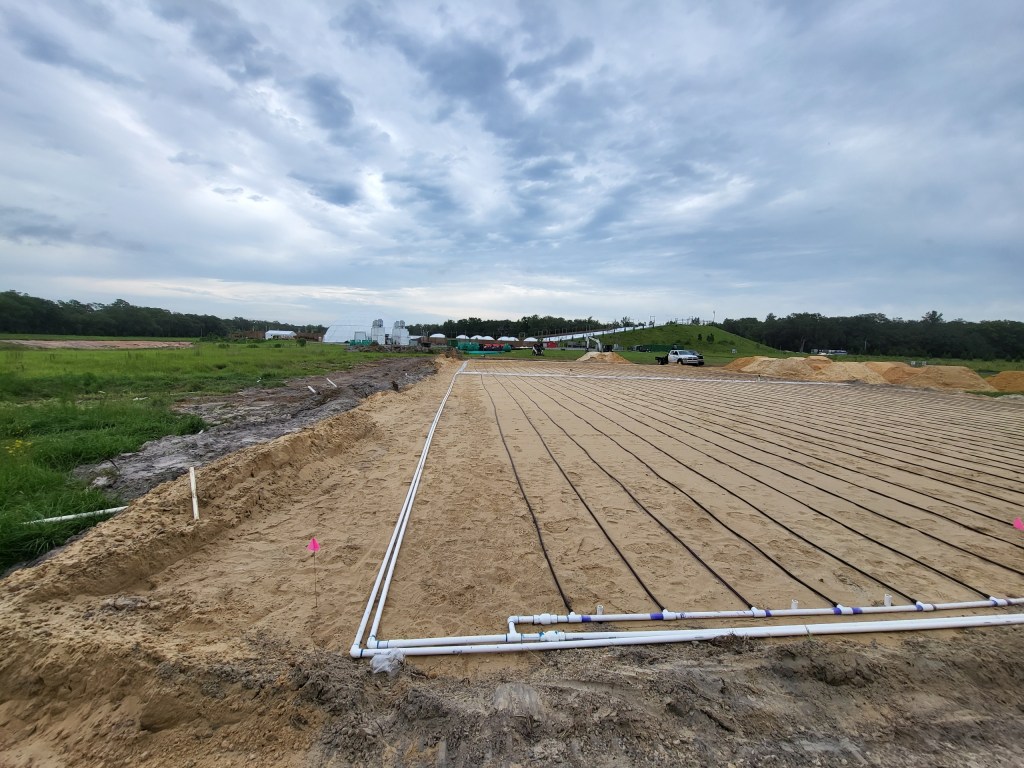
Drip system utilizing less square foot per gallon treated.
Ability to be in areas with higher water table: Drip irrigation systems have the ability to be used in areas with higher water tables through their ability to disperse water in a more efficient and effective manner, so, the need for extra soil and sand can be mitigated as compared to a traditional system.
By combining these strategies, engineers can effectively minimize the footprint of the drain field in a drip irrigation septic system. This reduction in required space not only conserves land but also allows for the installation of these systems in areas with limited space or challenging terrains, expanding the applicability and sustainability of drip irrigation septic technology.
If you are interested in a drip irrigation system, click the link below to get in contact with one of our representatives!
Contact – Florida Septic Design (floridasepticguru.com): Drain Fields And their massive footprint reduction! Florida Septic Design